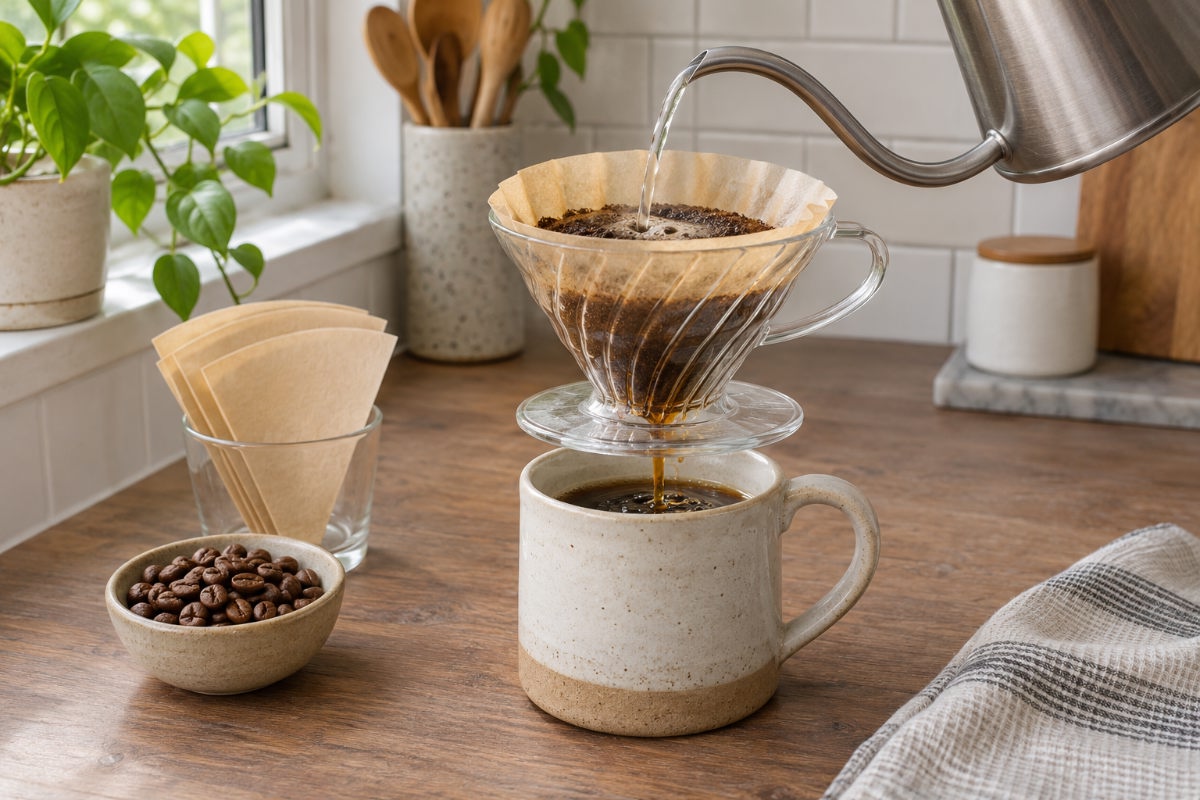
If the coffee you make at home tastes different every morning, start by making it the same way twice. Use the same cup, the same measure of grounds, and the same amount of water. You may find that a small adjustment gives you the taste you wanted, without replacing your coffee maker or turning the counter into a café.
Start with the equipment already in your kitchen
A drip maker works well if you usually brew more than one serving or like setting it up before your day gets busy. Use the smallest batch the machine’s instructions recommend, rather than assuming every carafe mark means the same thing as your mug. If you only make one cup and have a dripper, use that. A French press is another option if you already own one and don’t mind the small amount of sediment it can leave behind. The best choice is the one you can use and clean regularly.
Check the instructions for your machine or brewer. Clean the parts that touch coffee and make sure the paper or reusable filter is sitting properly. A film in a carafe or stray grounds in a reusable filter can be easier to fix than an inconsistent brew. Let the machine cool before cleaning and use only the cleaning instructions that match the equipment.
Keep the amounts consistent before adjusting them
Pick a mug you like and pour its usual serving of water into a measuring cup once. Write down the amount or note where it lines up on your machine. Measure the grounds the same way each day. If you own a kitchen scale, it offers another repeatable measure, but level scoops can work as a starting point. The National Coffee Association’s brewing guide explains how the amount of coffee and water, grind, and brewing method affect the cup.
Adjust just one variable next. If you like the taste but find it stronger than you want, try diluting one cup with a little hot water first. If it tastes thin, increase the grounds modestly for the next brew and keep the water the same. Note what you changed so you can repeat a cup you like. Changing the grounds, coffee variety, and water all at once makes it much harder to know what helped.
Match the grind to how you make coffee
If you buy ground coffee, choose a grind marked for your type of brewer or ask the shop to grind it for that method. A French press typically uses a coarser grind than many paper-filter setups. If you have a grinder, make a small change rather than jumping from one end of the dial to the other. Small changes are easier to compare, particularly if the beans are changing at the same time.
When a cup tastes sharp but weak, do not assume you simply need more grounds. Check whether all the grounds got wet, especially with a pour-over, and consider a slightly finer grind the next time if your equipment permits it. If a cup tastes harsh or dry, try a small move in the other direction and see what happens. Flavor depends on more than grind, but changing it independently gives you useful information. For convenience, the right bag of ground coffee may be a better fit than a grinder you don’t want to clean.
Fix the routine, not just the recipe
Coffee that sits longer than you intended can taste different from the cup you brewed. If you only want one mug, make one whenever your brewer is designed to handle it. If you share a batch, pour what you’ll drink and use the equipment’s warming settings according to its instructions. Keep the filter and mug near the brewer so that the simple version is the natural version on a rushed morning.
Milk and sweetener change what you taste. On a morning when you have time, take a sip before adding them so you can notice whether the base cup is too strong, too thin, or just right. If your regular drink includes milk, taste it the way you actually drink it before making a final decision. You are looking for your favorite routine, not someone else’s definition of a good cup.
Try a three-morning comparison
On the first day, brew your usual coffee and write down the amounts. On the second day, change one thing: the amount of grounds or the grind, not both. On the third day, repeat the better cup. Use the same mug and milk if you add it. If you still can’t tell a difference, that is useful too. You can choose the easiest version and stop tweaking. The test can save you from buying gear to solve a problem that was really about inconsistent portions.
If you want a break from making it yourself, our Santa Monica and Venice coffee and breakfast guide is a different kind of morning plan. At home, aim for the cup you can make half awake and still enjoy. A repeatable method leaves more room for the rest of the day.
Put a useful note on the coffee bag
Once you find an amount you like, keep a note next to the machine: which cup you fill, which scoop you use, and the water line that makes the right amount. If someone else in the house makes the first pot, they can use the same starting point. When you buy a different coffee, brew it once with those notes before changing anything. You can keep the same routine even if you prefer a slightly stronger cup on weekends.